
Fundació Puigvert↗︎


We are an international Centre of Excellence in bladder and cloacal exstrophy
Fundació Puigvert is the only accredited center in Europe.
Fundació Puigvert has been recognized as an international Centre of Excellence in bladder and cloacal exstrophy by the Association for the Bladder Exstrophy Community (A BE-C).
This distinction places us alongside the best centers in the world and confirms our leadership in the care and support of patients, children, and families living with this complex rare condition.

Fill out this form if you want to access Fundació Puigvert privately or request a second medical opinion privately


Bladder exstrophy
Bladder exstrophy is a rare congenital malformation, very uncommon, where the urinary bladder and genitals do not close properly during fetal development, remaining exposed outside the abdomen at birth.
The epidemiology shown by the European Society of Pediatric Urology indicates an estimated incidence of 1 in every 40,000-71,000 live births, affecting boys at approximately double the rate of girls.
Cloacal exstrophy
Cloacal exstrophy is the most severe form of the bladder-exstrophy-epispadias complex, where, in addition to the bladder, part of the intestines is also exposed.
It may be associated with other malformations such as spina bifida, genital and orthopedic malformations, and other issues affecting the kidneys and spine.
Epispadias
Epispadias is a rare congenital defect in which the urethra opens in an abnormal position on the upper side of the penis in boys or very close to the clitoris in girls. It can affect urinary continence, the appearance of the genitals, and, in some cases, sexual function. This malformation can occur in isolation or as part of a more complex condition, such as bladder exstrophy or cloacal exstrophy.
Common complications include:

Urinary incontinence, as children cannot retain urine.

Higher risk of urinary infections, kidney and digestive problems, and difficulties in sexual or reproductive function in adulthood.

Requires multiple surgical interventions during childhood and multidisciplinary follow-up.

Pediatric Urology Unit: a pioneering approach

Head of the Unit
Pediatric UrologyDr. Anna Bujons Tur
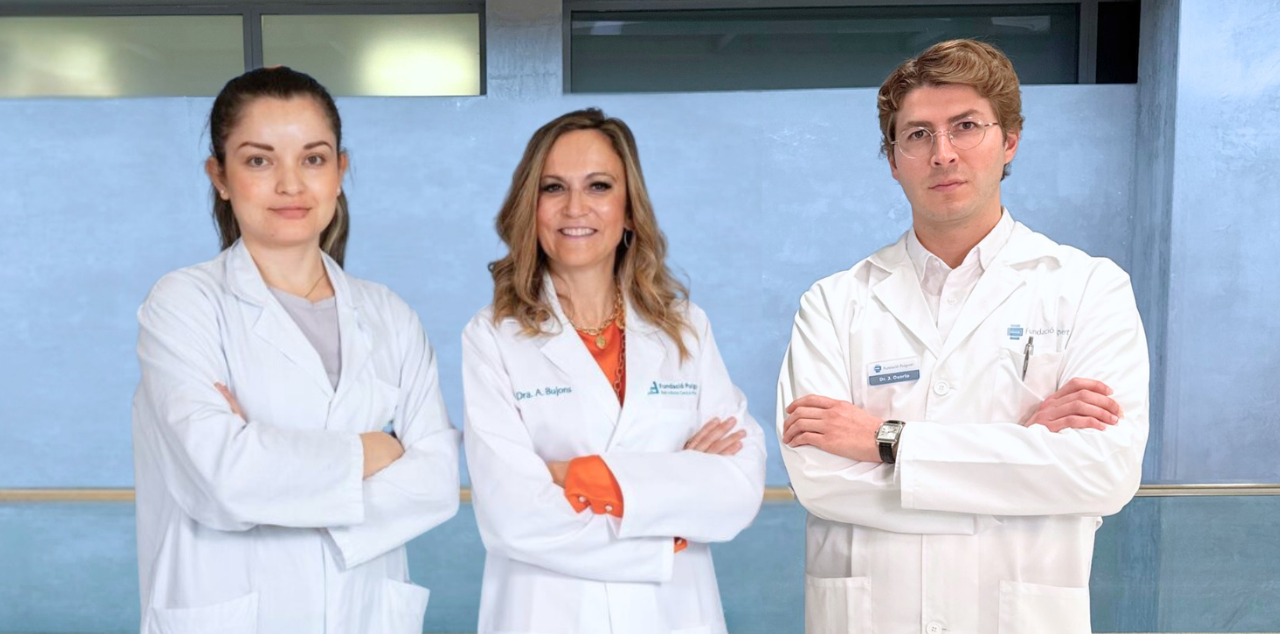
The Pediatric Urology Unit at Fundació Puigvert is led by Dr. Anna Bujons, an international reference in congenital urogenital malformations and high-complexity surgical treatments. Dr. Bujons holds a Cum Laude Doctorate in Medicine and Surgery, is a specialist in Urology, and has a solid track record in managing conditions such as bladder exstrophy, cloacal exstrophy, complex hypospadias, and pediatric urinary lithiasis.
The professionals in the Unit are pioneers in clinical research, dissemination, and training, with active participation in innovative projects such as the use of stem cells for urinary reconstruction.

We respond to the medical, emotional, and social challenges posed by bladder and cloacal exstrophy:

Minimally invasive and robotic reconstructive surgery.

Comprehensive diagnosis and longitudinal follow-up, from prenatal diagnosis to adulthood.

Personalized surgical and medical treatment, with structured transition circuits to ensure continuity of care in adulthood.

Psychological support, genetic counseling, specialized nursing consultations, and coordination with other hospital specialties.
Fundació Puigvert: the best specialized care.
50 years
of expertise
Integrated and multidisciplinary circuit
Personalized follow-up
Collaboration with
Sant Pau – Campus
Health Barcelona


At Fundació Puigvert, we have a long experience in caring for international patients, offering a specialized circuit and personalized coordination so that families from around the world can access our treatments and expert follow-up with total confidence and comfort.

1. What does surgical reconstruction of bladder exstrophy involve?
Surgical reconstruction involves several interventions to close the bladder, correct the position of the urethra, and address the anatomy of the genitals and pubis. It often begins in the neonatal period and requires more surgeries during childhood and adolescence to improve urinary continence, as they are born without a urinary sphincter or continence mechanism, preserve renal function, and the genital appearance. As they grow, they require other treatments to improve continence, for example. It is important to note that follow-up and monitoring are necessary at different stages of life, and this aspect is fundamental.
At Fundació Puigvert, we take an integrated and lifelong approach, incorporating, according to their needs, the necessary professionals to address gynecological, sexual, digestive aspects… That is, a multidisciplinary team is required.
2. What complications are most common in bladder and cloacal exstrophy?
Common complications include:
- Persistent or partial urinary incontinence
- Need for repeated interventions to reconstruct the bladder, urethra, and genitals
- Increased risk of urinary infections and progressive deterioration of renal function
- Orthopedic (pubic separation) and digestive alterations, especially in cloacal forms
3. Is it possible to have a normal social, school, and adult life with exstrophy?
With proper follow-up and access to specialized treatments, most children with exstrophy can lead an active, educated life and integrate normally. Psychological support and social accompaniment are key for adaptation and self-esteem.
4. Does cloacal exstrophy involve more surgeries or complications than bladder exstrophy?
Yes. Cloacal exstrophy is more complex: it may require more interventions and the involvement of other specialties (digestive, orthopedics, neurology) as it affects different organs in addition to the bladder. It may be associated with spina bifida and anomalies in the kidneys, genitals, spine, or anus.
5. Is the treatment the same for boys and girls?
The basic approach is similar, but the surgical approach may vary according to sex to adapt to the genitourinary anatomy and future needs for continence, sexuality, or fertility.
6. Can it be prevented or detected before birth?
Most cases are diagnosed through prenatal ultrasound in the third trimester of pregnancy, allowing for planning of delivery and initial intervention. Prevention is still not possible, as it is a congenital alteration of unknown origin.
7. Is catheterization or a device always necessary to urinate?
Depending on the case and the results of the reconstruction, some patients will maintain the ability to urinate spontaneously, but others may require intermittent catheterizations to empty the bladder and avoid infections.
8. What does long-term follow-up involve?
Long-term follow-up is essential, and at Fundació Puigvert, we integrate and direct it globally, offering a lifelong program that accompanies each person from birth to adulthood. It includes periodic check-ups with pediatric urology, nephrology, psychology, and rehabilitation, and a structured transition to specialized units in adulthood to preserve renal function, continence, and quality of life.
Depending on the needs of each case, gynecology, functional urology, pelvic floor rehabilitation, digestive, reconstructive and plastic surgery, and andrology also intervene, forming a multidisciplinary team that ensures comprehensive and personalized care.
9. If I am from another community or country, can I access the referral circuit of Fundació Puigvert?
Yes. We are the only center of excellence in Spain accredited by A-BE-C and the networks XUEC, CSUR, and eUROGEN, with state and international coverage.
REQUEST AN APPOINTMENT
Do you want to consult your case with our expert team in bladder and cloacal exstrophy?
Request an appointment for a personalized evaluation or to resolve any doubts about your diagnosis, treatment, or follow-up. We accompany you throughout the process, with comprehensive and multidisciplinary care.
Scheduling private visits:
Monday to Thursday, from 8 am to 8 pm
Friday, from 8 am to 6 pm
e-mail: [email protected]


 Català
 Español